Welcome to Aliud Records.

Blog Standard Whole Post

Aliud Records / Blog Standard Whole Post (Page 8)

Les Goûts Authentiques

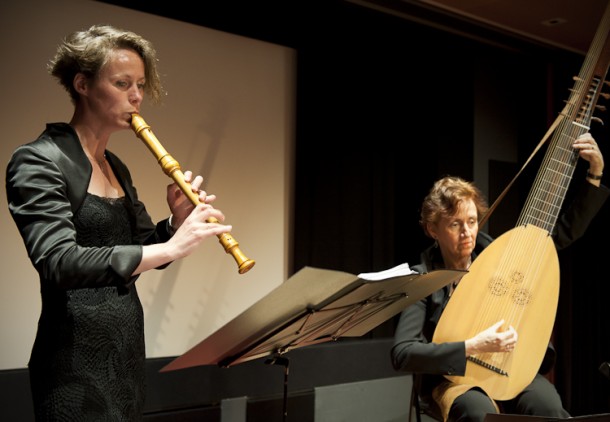
Les Goûts-Authentiques want to present different music styles from the Baroque and early Classical period to the public. The musicians play on copies of historic instruments and aim to revive the ancient flavours as authentically as possible. Besides trying to be historically correct (if that’s even possible?), they of course want to play the music in a lively and colourful manner. The line-up of the ensemble depends on the repertoire, see also: Les Cordes-Réunies and Les Clavecins-Réunis.

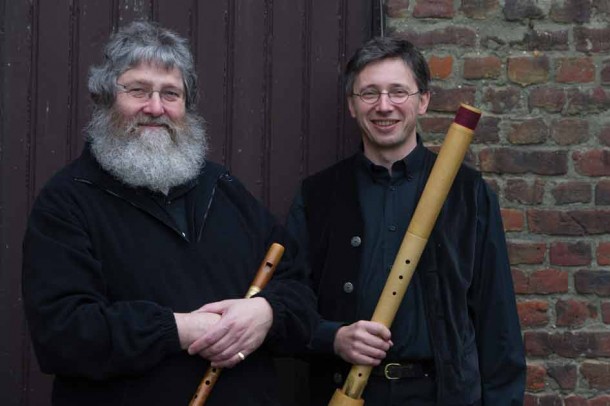
Jan Devlieger studied at the Conservatory of his hometown Ghent and was awarded first prizes in harmony, counterpoint and fugue (W. Carron) and first prize in chamber music (M. Ketels). At the Ghent High School of music he got Master’s Degree in recorder (P. Peire) and Harpsichord (C. Verhenneman). As a musician – harpsichord player, organist, recorder player and singer – he has worked together with many ensembles, such as Currende Consort, Ex Tempore, Le Mercure Galant, I Brugensi, Het Kamerorkest, Het Symfonieorkest van Vlaanderen, Amanti dell’ Arte, Ardalus, De Filharmonie, Spectra, Aquarius Soloists.

Marcel Ketels studied early music theory, chamber music, recorder and transverse flute with Barthold Kuijken, Oswald Van Olmen and Johan Huys at the conservatories of Ghent and Brussels. With Les Enemis Confus and Pandora, he won the international competition for ensembles Musica Antiqua in Bruges. Marcel Ketels has made a considerable number of recordings for radio and television and recorded several CDs. He is an honorary professor of recorder music, theory and practice of early music, chamber music and recorder teaching methodology at the Conservatory of Ghent. He was also the director of the Academy of Music.
Jeppe Moulijn

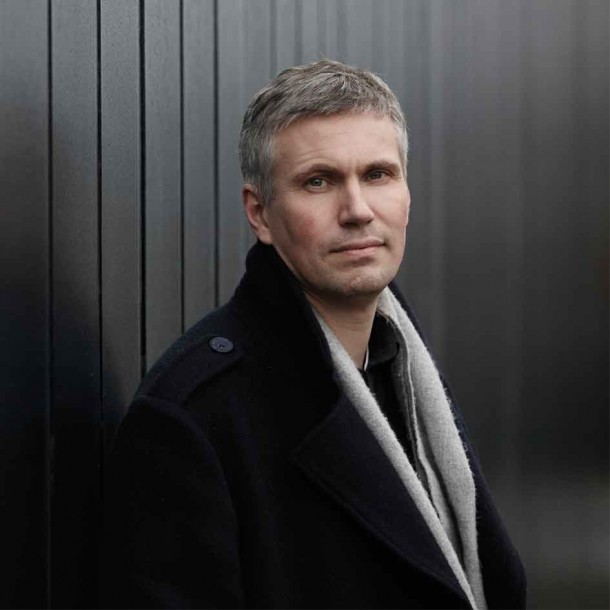
Jeppe Moulijn (1972) studied orchestral conducting with Ed Spanjaard and Jac van Steen at the Royal Conservatory in The Hague. He completed his study as a guest director at the Radio Symphony Orchestra. Following that performance, he was awarded the Anton Kersjes grant. Moulijn was also appointed as assistant conductor with the then Dutch Ballet Orchestra, thanks to the award of the Bernard Haitink grant to him and the orchestra. In this position he conducted many performances with the National Ballet and the Nederlands Dans Theater, including Tchaikofsky’s Nutcracker, Swan Lake and Sleeping Beauty, Prokofievs Cinderella and Stravinsky’s Sacre du Printemps. From 2001 to 2003 he was the musical leader of the Dutch National Ballet.

In addition, Jeppe Moulijn conducted with the Radio Symphony Orchestra, the Metropole Orchestra, the Orchester Symphonique de Dijon and the Noordhollands Philharmonisch Orkest and Musica Ducis.

He also led ensembles such as the Maarten Altena Ensemble and Slagwerkgroep The Hague. He was a regular guest conductor with the Limburg Symphony Orchestra. He led various productions at the opera classes of the conservatories of The Hague and Amsterdam. In 2004 he was assistant conductor with a production of John Adam’s The Death of Klinghoffer with the Rotterdam Philharmonic Orchestra and the Onafhankelijk Toneel. In 2005 he led the production Orfeo Intermezzi with this latter company. In November 2005 he conducted Die Zauberflöte at the Opera Studio Nederland. In May 2006, Jeppe debuted at the Stadttheater Hagen (Germany) with Prokofievs ’Cinderella.

Following this debut, he was immediately asked for a symphonic concert in 2007. April 2011, Jeppe made his debut at the Staatsphilharmonie Rheinland-Pfalz with a major ballet production. in 2014 he debuted with The Evergreen Symphony Orchestra in Taiwan with Strawinsky’s Le Sacre du Printemps and the Ninth Symphony by Dvorak.

Jeppe Moulijn attended master classes in Moscow with Jorma Panula and in England with George Hurst and Diego Masson. In 2000 he was the only Dutch participant in the Kondrashin conductor’s master class where he worked with Peter Eötvös, Eri Klas and Ton Koopman. In 2003, Jeppe Moulijn was a finalist in the international Prokofiev competition for young conductors in St. Petersburg. On this occasion he conducted a concert with the world-famous St. Petersburg Philharmonic Orchestra. From 2004 to 2006 he completed his education with 3 years of intensive studies with Daniele Gatti, the new chief conductor of the Royal Concertgebouw Orchestra, in Florence.

Jeppe Moulijn is also a popular conductor in the world of student, youth and amateur orchestras. From 1993 to 2004 he was conductor and co-founder of the Nederlands Strijkers Gilde, which focuses on music of the 20th and 21st centuries. He was previously conductor of the Leiden student orchestra Collegium Musicum for 5 years. From 2000 to 2008 he conducted the UvA student orchestra Jan Pzn. Sweelinck. He is currently affiliated with the Naardens Chamber Orchestra, the Toonkunst Orchestra Leiden and the East Netherlands Symphony Orchestra.

In addition to his activities as a conductor, Moulijn is active as a composer and arranger.

Trigon Ensemble

TRIGON ensemble is specialised in studying and performing medieval spiritual music. How medieval music sounded at the time no one can really know. What we can do is study the contemporary treatises that were written on the subject. And we can get as close as possible to the music by studying the original sources. That is why TRIGON studies and sings from these original scores, as found in manuscripts.

Trigon is the name of a movement symbol in Gregorian chant, also known as a neum. It describes a lightly sung movement which first goes a little up and then a little down. Early music is strongly characterized by movement; aside from the music’s modality, this same movement gives the music its vitality. In its interpretation, TRIGON aims to revive and render this movement by producing a purity of tone that resonates both in body and soul.

Artistic director Margot Kalse founded TRIGON after she obtained her master’s in Early Vocal Music in 1998, having studied with Rebecca Stewart at the Fontys conservatory in Tilburg. At this institute she taught vocal technique for Early Music for seven years. Before that, she studied Solo Singing at the Royal Conservatory in The Hague and Early Dutch literature at the University of Leyden.

Marsja Mudde studied Early Vocal Music in Tilburg and since then has been coached by Margot Kalse. Medieval spiritual song and chant were her specialisation and graduation topics. She specialised further by following several workshops and courses given by Rebecca Stewart, Giacomo Baroffio, Maria Jonas and Anne Azema.
Cora Schmeiser obtained her master’s in Solo Singing at the Royal Conservatory The Hague. She participated in several historical projects of Early Music during that time. In Fulda, Germany, she followed a three-year course in medieval music by Marc Lewon and Uri Smilansky. Since its foundation in 1994 she has been a permanent member of Ars Choralis Coeln in Germany.

Korneel Bernolet

Korneel Bernolet (b. 1989) is active as both a harpsichordist and a conductor.At the age of 19, he made his début with La Petite Bande (Sigiswald Kuijken). From then onwards, he is regularly invited as a soloist or ensemble player with a.o. Scherzi Musicali (Nicolas Achten), B’Rock, cantoLX (Frank Agsteribbe), Mannheimer Hofkapelle (Florian Heyerick) and Musica Favola (Stephan Van Dyck), besides Ensemble Apotheosis, which he founded and directs himself.As a respected continuo player, he took part in recordings for broadcast, CD and television for the labels Accent, Ricercar, Alpha, Musique en Wallonie, Klara, Musiq3, France Musique, Mezzo… Thus far, he has appeared in Belgium, the Netherlands, the United Kingdom, Germany, Luxembourg, Italy and Spain.After completion of his piano studies with Paul Clcment, Korneel has enjoyed his harpsichord training with highest honors (summa cum laude) at the Royal Conservatoire of Antwerp in the class of Ewald Demeyere on the famous Dulcken 1747 harpsichord (Museum Vleeshuis). Simultaneously, he refined his playing through mastercourses at the Amsterdam Conservatoire (NL) with Gustav Leonhardt and Menno Van Delft, the Académie Baroque de Lanvellec (F) with Frédérick Haas and Erwan Le Prado (historical improvisation) and several times at the Piccola Accademia di Montisi (I) with Jesper Bøje Christensen and, in particular, Christophe Rousset.As a conductor, Korneel was allowed participation at the highest level of the international Kurt Thomas Course in Utrecht (NL) at the age of 18. Having followed mastercourses with Daan Admiraal and Georg Grün, he was selected to conduct choir and orchestra during the final concert. He is currently completing his Master’s degree with Geert Hendrix and Luc Anthonis at the Antwerp Conservatoire, where he will graduate at the end of June 2013. From January 2011 on, he is principal conductor of the reknowned Bruges choir Vagantes Morborum. Korneel is regularly in charge as a baroque and early-classical repertoire coach with prominent vocal soloists.In 2008, Korneel conducted the Nederlands Wind Ensemble (NBE) in orchestral work of his own writing and led Haendel dance productions at the Antwerp Conservatoire (2009 and 2011). He assisted Frank Agsteribbe in 2010 with B’Rock at the Gergiev Festival (NL) and the Klarafestival (B) in Claire Croizés dance production ‘Vor deinem Thron’, during the same year he also was assistent-director to Ewald Demeyere in the Flemish opera production ‘De Signôor in China’ (c.1760) by J.T. Baustetter at the Antwerp Conservatoire. He conducted the continental creation of ‘The Death of Dido’ (1716) by J.C. Pepusch in eight performances during the Ghent Festivity. For January 2013 he is reappointed assistent to Ewald Demeyere in J.C. Bach’s ‘Artaserse’ at the Antwerp Conservatoire.Korneel obtained the degree of Master of Music with highest honors (summa cum laude), as well as final levels in harmony, counterpoint and fugue. On completion of his harpsichord studies, he was engaged at the Artesis University College (departement Royal Conservatoire) as guest professor of  ‘practical harmony and improvisation’ and harpsichord accompanist. He also teaches harpsichord at the academy of Alost. A researcher at the Antwerp Conservatoire Library, his passion for music typography results in the editing and high quality typesetting of music scores. Korneel is equally active as a recording engineer, offering his experienced ears and technical knowledge to classical musicians.In March 2008, Korneel obtained a first prize at the ‘Dexia Classics’ competition. In November 2010, he was awarded the first ‘ARTos Muziekprijs’ for ‘special artistic achievements’. Korneel is ‘artist in residence’ at vzw SWUK Vlaanderen during the concert season 2012-2013. As ‘Laureat 2013’ of this organisation, he will be recording his first solo disc with ‘Pièces de clavecin’ (1759) by Claude-Bénigne Balbastre on his magnificent Hemsch 1736 copy by Augusto Bonza (collection Korneel Bernolet), to be released through Aliud Records around spring 2013.

Bob van der Ent

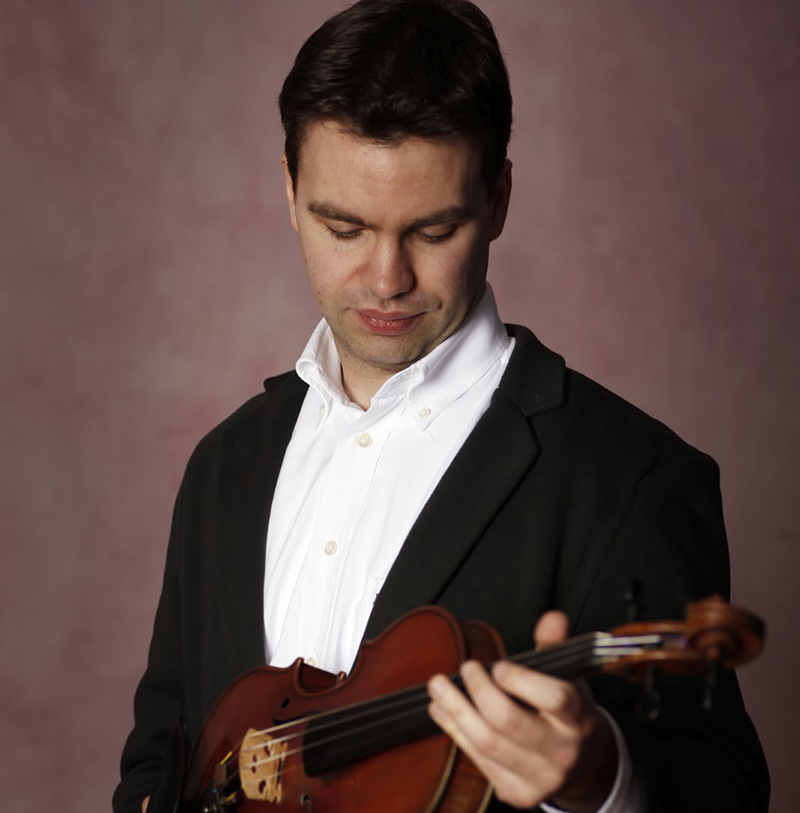
Bob van der Ent (1982) began his violin studies with Lauri Vreeken-Bos at the age of five and subsequently studied with Jan Repko, Davina van Wely and Herman Krebbers. In 1993 he was one of the first students admitted to the special Young Talent Department at the Conservatory of Amsterdam, where he graduated in 2006 with Vesko Eschkenazy, leader of the Royal Concertgebouw Orchestra. He followed master classes with renowned violinists such as a.o. Lorand Fennyves, Eduard Grach, Shmuel Ashkenazy (primarius of the Vermeer Quartet), Ivry Gitlis and Pierre Amoyal. Since his debut, at the age of 10, as soloist with the Dutch Youth String Orchestra under the guidance of Roland Kieft, he has worked as a soloist with many orchestras. In 2005 he made his debut in the main hall of the Concertgebouw in Amsterdam under the guidance of Jurjen Hempel. Van der Ent has received numerous prizes on a national and international level. In 1996 he won the first prize at the Iordens Viooldagen (the national violin competition for young violinists), and at the Princess Christina Concours (1999). In 2000 he achieved the Diplôme d’Honneur at the famous International Wieniawsky- Lipinsky Competition in Poland and in 2005 he was prize winner at the National Violin Competition Oskar Back. In 1995 he gave his first recital and he performed in renowned halls such as the Concertgebouw, Muziekcentrum Vredenburg (Utrecht), the Doelen (Rotterdam) etc., and in Belgium, France, Austria, Switzerland, Portugal, Russia and the United States. Van der Ent also performed for radio and television. He continues to provide his assistance to the Royal Concertgebouw Orchestra on a regular basis.

Ensemble Rossignol

Ensemble Rossignol (nightingale) owes its name to its first series of performances in 1998 built around De virtuoze zang van het Engels Nachtegaeltje (The virtuoso song of the English Nightingale) by Jr. Jacob van Eyck (Amsterdam, 1648). The virtuosity and the refined, musical, playful and inspiring performance of the ensemble immediately call to mind the nightingale’s song. Ensemble Rossignol previously released two CDs under its own management: LocLoc Locke en Locatelli gelardeerd… (Locke and Locatelli interlocked…) and Sprong AchttienTwintig (Eighteen-twenty).